 United States

























For banks and credit unions, choosing a merchant-services partner used to be a relatively straightforward decision. You evaluated pricing, reliability, and basic payment-processing capabilities, then selected a provider that checked those boxes. But those days are gone.
Today, payments are no longer a standalone service—they’re embedded into every aspect of how your business clients operate. From point-of-sale systems to mobile apps, from subscription billing to unattended kiosks, payments have become part of a much larger ecosystem. And that shift, in turn, has raised the stakes for financial institutions.
The wrong merchant-services partner doesn’t just limit payment capabilities—it can slow innovation and growth across your entire commercial banking strategy.
So how can you tell whether a merchant services provider is truly modern, innovative, and built for the future? It comes down to evaluating not just what they offer today, but how they’re built to evolve.
Payments vs. Platforms: Look for a Software-Led Approach
The first and most important distinction is whether a provider is payments-led or software-led.
Traditional providers focus on processing transactions. It all boils down to payment processing. Modern providers, on the other hand, focus on enabling business operations through software, with payments seamlessly integrated in the background. This includes connections to point-of-sale systems, ecommerce platforms, invoicing tools, and vertical-specific applications.
A future-proof partner will offer robust APIs that allow payments to be embedded into virtually any workflow. They’ll also provide value-added capabilities like reporting, customer insights, and integrations with systems like inventory or accounting, such as QuickBooks Online.
Here’s a hint: If the conversation centers on payment terminals, hardware, or processing rates, that’s a sign you’re dealing with a legacy mindset. If it centers on software, data, and efficiency, you’re on the right track.
Omnichannel Is No Longer Optional
Modern businesses don’t think in terms of separate sales channels—and your merchant-services partner shouldn’t either.
Whether a customer pays in-store, online, via mobile, or through an invoice link, the experience should feel unified. That means merchants need a single view of their transactions, customers, and performance across all payment types.
A strong partner will provide:
- Unified reporting across all channels
- Consolidated customer profiles
- Support for in-store, online, mobile, and recurring payments
They should also support additional use cases like pay-by-link, subscription/recurring billing, and mobile-first checkout experiences.
A common red flag is when these capabilities exist but are stitched together from multiple systems. True omnichannel platforms are built as a single, cohesive ecosystem—not a patchwork.
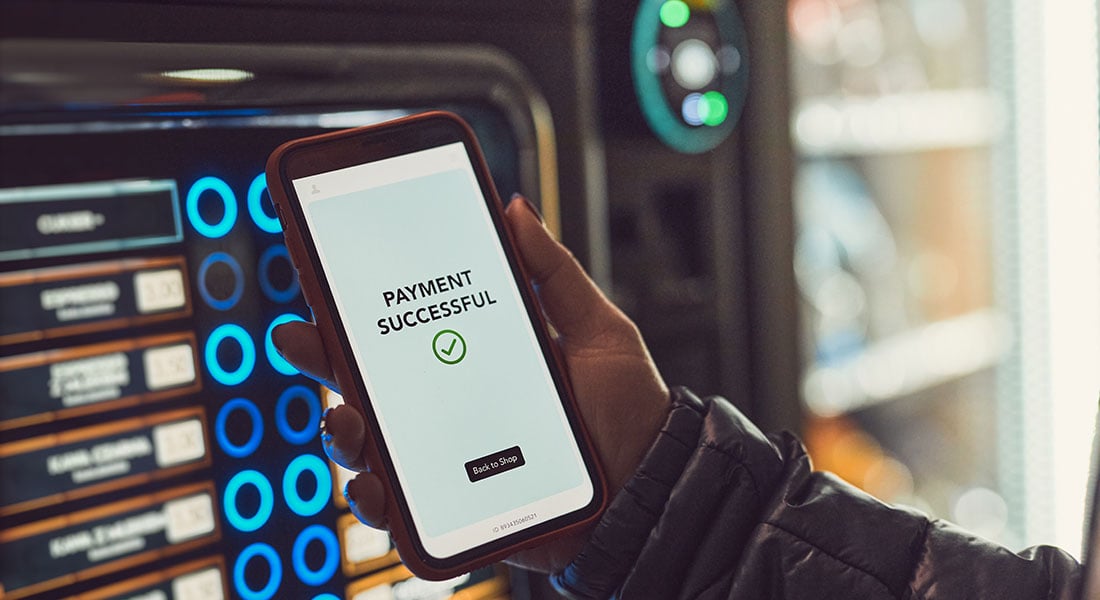
The Rise of Unattended and Embedded Payments
One of the fastest-growing areas in payments is unattended commerce—think vending machines, kiosks, parking systems, laundromats, and even EV charging stations. How many of your current or prospective business clients use (or plan to add) unattended payments? The number is probably higher than you think.
This is where the gap between legacy and modern providers becomes especially clear.
Future-ready partners support:
- Tap-to-pay terminals for unattended environments
- Telemetry devices that connect machines to payment systems
- API-driven activation (such as QR code or app-based payments)
- Remote monitoring and fleet management tools
These capabilities aren’t just “nice to have.” They represent a major shift in how payments are happening in the real world. A partner that lacks a strong strategy here may already be behind.
Developer Experience Signals Long-Term Viability
One of the clearest indicators of a partner’s future readiness is how easy it is to build on their platform. This criterion often goes overlooked in merchant-services evaluations, but it shouldn’t. A strong developer ecosystem signals that the platform is flexible, extensible, and capable of adapting to new use cases.
Even if you’re not a software expert, you should still look for a merchant-services provider’s readily available developer tools, including:
- Public, well-documented APIs
- Software development kits (SDKs)
- Sandbox environments for testing
- Real-time data access via webhooks
- Prebuilt integrations and app marketplaces
A simple litmus test: would a fintech company or software developer choose to build on this platform? If the answer is no, it’s a warning sign.
Support for Emerging Payment Types
Future-proofing isn’t about predicting one winning technology—it’s about supporting many.
A strong merchant-services partner to financial institutions should already support, or be actively rolling out:
- Contactless and mobile wallet payments
- ACH and account-to-account transfers
- Real-time payment rails
- Subscription and recurring billing models
- Tokenization and secure credential storage
If a provider is slow to adopt multiple trends—or repeatedly says they are “evaluating” them—it suggests a lack of agility.
Data Is the New Differentiator
Payment processing itself is becoming commoditized. What differentiates providers now is what they do with the data.
Modern merchant-services platforms go beyond basic reporting. They provide actionable insights that help merchants run their businesses more effectively—whether that’s identifying sales trends, optimizing pricing, or understanding customer behavior.
For financial institutions, this is especially important. A strong partner will enable you to:
- Deliver branded dashboards to your clients
- Surface insights that deepen client relationships
- Identify opportunities for cross-selling services like lending or treasury management
In this way, merchant services becomes more than a product—it becomes a driver of broader commercial growth.

Alignment with the Bank’s Strategy
Not all merchant-services innovation is aligned with your interests.
Some of the most advanced payment providers are built to serve businesses directly, not financial institutions. Bigger is not always better. Fintech leaders like Stripe and Square operate models that can take over business banking entirely. For you, that can create friction—and direct competition—over time.
A strong partner will demonstrate:
- A bank- or credit-union-first go-to-market approach
- Flexible branding options
- Clear alignment on customer ownership
- Integration with your existing commercial banking services
If a provider positions themselves as the primary relationship owner with merchants, it’s worth reconsidering the long-term implications.
Roadmap Velocity Matters More Than Feature Lists
It’s easy to be impressed by a long list of features. What matters more is how quickly that list evolves.
Ask potential merchant-services partners:
- What have you launched in the past 12 months?
- How frequently do you release updates?
- What’s on your roadmap for the next year?
The answers will tell you whether the platform is actively improving or simply maintaining its current state.
A future-proof partner should demonstrate a clear pattern of innovation, not just a promise of it.
Look Beyond Polished References
Every provider can produce satisfied customers. To get a real picture, you need to dig deeper.
Ask for references that are:
- Similar in size and complexity to your institution
- Operating in emerging or high-growth segments
- Using advanced features, not just basic processing
Then ask candid questions:
- Where does the provider fall short?
- What capabilities are still missing?
- How responsive are they to change requests?
These conversations often reveal more than any formal presentation.
Watch for Legacy Constraints
Finally, ask about the underlying architecture.
Some merchant-services providers appear modern on the surface but rely on legacy infrastructure behind the scenes. This can limit their ability to innovate, even if their interface looks current or their solutions list seems impressive.
Warning signs include:
- Heavy dependence on third-party processors
- Long or complex onboarding processes
- Slow rollout of new features
- Frequent references to “processor limitations”
These constraints tend to compound over time, making it harder for financial institutions to keep pace with market demands.
The Bottom Line
At its core, selecting a merchant-services partner is no longer about choosing a vendor—it’s about choosing a platform partner.
A future-proof partner will help you embed payments into your broader commercial banking strategy, deepen client relationships, strengthen client retention, enable new client acquisition, and unlock growth opportunities—including increased deposits. A legacy partner, no matter how competitive their processing pricing, will eventually hold you back.
The difference becomes clear when you shift your evaluation from “What do they offer today?” to “How are they built to evolve tomorrow?” Financial institutions that get this right won’t just keep up with change—they’ll help lead it.
To learn more about how Payroc is a strong, future-proof merchant-services partner, connect with me by selecting “Get started” here.