 US
US



How does your bank treat merchant services? Some community and regional financial institutions consider merchants services as merely operational. To take payments, the thinking goes, business clients need payment-processing. It’s just a necessary ancillary service.
But a strong merchant-services program can and should actually do a lot more for your bank than take care of customer payment-processing needs. In fact, payments create growth opportunities for financial institutions in a number of ways, which we’ll go over in this article.
It’s also essential to keep in mind that business owners want to get their merchant services from their banks. According to a 2024 report by Cornerstone Advisors, nearly 70% of small business owners said they’d rather use their bank for merchant/payment services if the experience and pricing were competitive. Why? Because you’ve already built a business relationship with them, which they value and trust. And they see payments as another facet of financial services. It's a salesperson’s dream, really—having customers lined up who are ready and willing to buy your products.
The upshot is that prioritizing merchant services and having a great payments partner who can help you make the most of this opportunity is a win-win-win. Let’s see how.
Revenue Opportunities in Modern Payment Models
Merchant services provide financial institutions with a recurring, scalable source of non-interest income.
There a few ways this can happen. Revenue-share models share processing-rate markups between the processor and the bank. The processor handles boarding, support, and risk, and the bank acts as sales agent. This is the most common model among community banks and credit unions. Next is buy-rate models, which allow the bank to buy processing at a wholesale rate then mark it up. Under this setup the bank takes on more risk and compliance obligations. Payfac-as-a-service and bank as direct acquirer are other structures, but these are generally only used by large regional and national banks and credit unions.
For banks, payments-driven revenue is desirable because it’s transaction based and, unlike loan interest, does not fall when interest rates fall.
Payments as a Loyalty Engine
Now that cash transactions have fallen to about 15% of all sales transactions for U.S. SMBs, digital payments are the norm. Businesses and their customers increasingly expect faster, safer, and more flexible payment options, including contactless, digital wallets, and ACH.
While some small businesses have entered the digital payment era reluctantly, many are realizing that it does provide them with game-changing benefits. For instance, modern payment options can enhance operational efficiency and improve cash flow. Where merchant services used to be about payment processing, today, cost-effective payment processing is just the beginning.
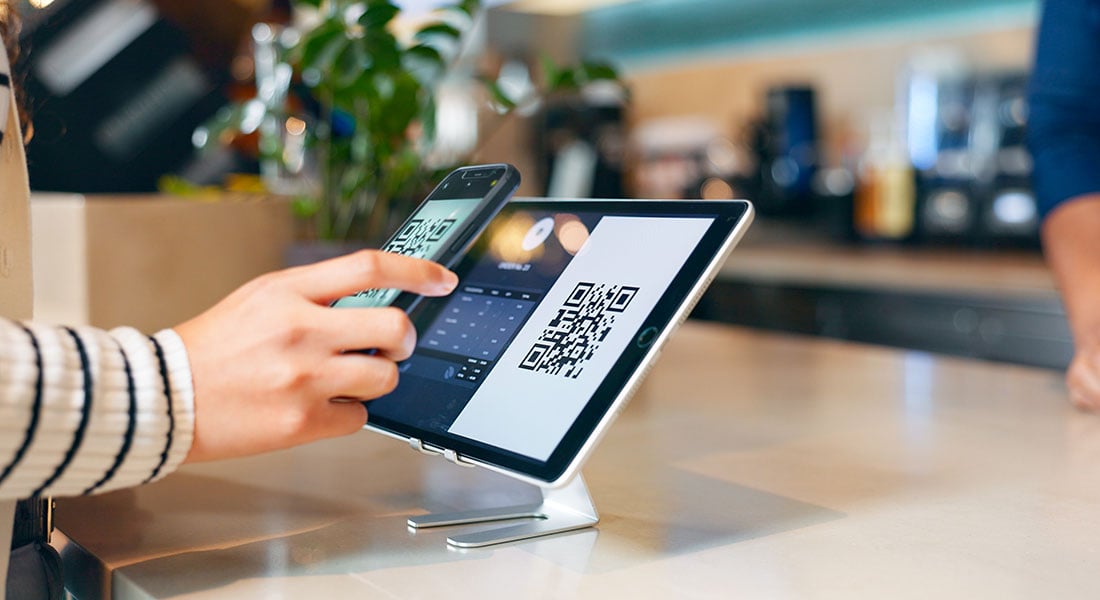
A robust, bank-centered merchant-services program helps businesses succeed and grow. When you meet these expectations, client loyalty goes up. You also reduce the risk of losing business clients to shiny new fintech competitors.
Risk Management = Revenue Protection
Strong payments security and compliance practices helps businesses reduce costly chargebacks, fraud losses, and reputational damage. Because a solid merchant-services program helps businesses manage payment risks in these ways, it also, by extension, provides financial institutions with revenue protection. In other words, a trustworthy payments infrastructure indirectly contributes to bank profitability by lowering risk exposure.
Of course, helping business clients manage payments-related financial risk also enhances your institution’s reputation as a financial strongbox and expert. And in the long run, that may be the most profitable opportunity of all.
Unlock Cross-Selling Opportunities
In addition to non-interest income, enhanced client retention, and revenue protection, a strong merchant-services program provides banks with cross-selling opportunities. How? Through good payment reporting, which uncovers insights about business clients that deposit-account data alone can’t.
Data like rising transaction counts, increasing average ticket size, settlement timing, chargeback volume, and changing channel sales reveal opportunities for treasury and cash-management conversations. And ultimately, helping improve a business’s operational efficiency, cash flow, and growth readiness is seen as a significant value-add.
Scaling for Growth
Once your merchant-services partner and processes are set up, the system scales easily, generating more and more recurring revenue with minimal incremental effort. Every new merchant who comes on board adds to your bottom line.
All of the revenue opportunities we’ve reviewed in this article build upon one another. As your bank’s payments expertise grows, so does your commercial reputation and business-customer loyalty. As a result, your growth opportunities tend to snowball exponentially.
Taking the Next Step
As we’ve seen, modern merchant services unlock hidden revenue directly and indirectly for financial institutions. They do so by building client loyalty, strengthening retention, enhancing risk management, delivering cross-selling opportunities, and differentiating you from other banks and bankers.
The ideal merchant-services provider will see you as a strategic partner and treat you like one, providing education and marketing, and positioning your bank for growth.
Payroc has partnered with financial institutions since 2003 and serves over 190,000 merchants. We offer a complete product lineup, POS, and payment-system recommendations personalized to each merchant, and award-winning support for both our FI partners and merchants.
To learn more about Payroc’s merchant-services program, connect with me by selecting “Get started” here.